


Light Therapy: What Is It?
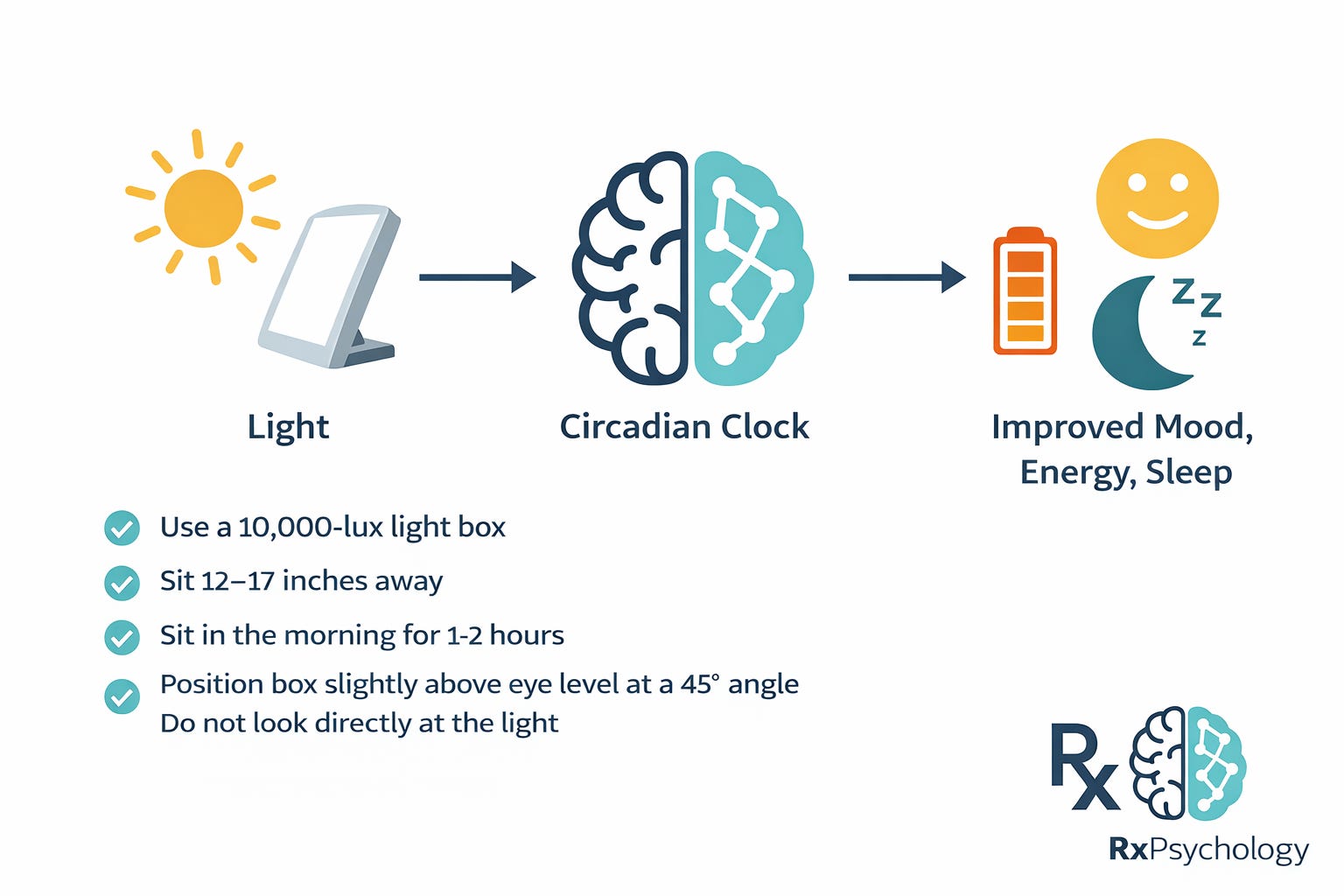
Light therapy is a non-pharmacological treatment that uses bright artificial light to reset the brain’s biological clock (circadian rhythm).
Depression symptoms such as fatigue, low motivation, poor concentration, and mental “fog” are related to misalignment in our circadian rhythm. Since this internal clock is primarily set by light and darkness, a targeted dose of morning light can help shift the rhythm back into alignment and improve mood.
Light therapy was originally developed at the National Institute of Mental Health to treat winter depression, and it is comparable in potency to antidepressant medication1 for some patients. Importantly, because of the large amount of time we all spend indoors, this treatment is often effective in the summer months as well.
What Does It Treat?
Light therapy is most strongly supported for:
Major depressive disorder
Seasonal affective disorder (SAD)
Circadian rhythm sleep–wake disorders
Depressive symptoms are associated with irregular sleep schedules
It may also be helpful as an adjunctive treatment for:
Fatigue
Low energy and motivation
Cognitive slowing related to circadian disruption
Evidence strength: Strong for SAD, moderate for nonseasonal depression
How to Use It
Standard Use (Unipolar Depression):
Use a 10,000-lux light box with a UV filter
Sit 12–17 inches from the box (or per manufacturer instructions)
Position the box above eye level at a 45° angle, mimicking the sun
Do not stare directly into the light
Use it for 1–2 hours per day, ideally early in the morning
You can read, eat, or use a laptop while under the light
Timing matters:
Morning exposure is critical
Light therapy works by advancing the biological clock
Consistency is more important than intensity alone
Onset of benefit:
Full effect: 2–4 weeks
Early improvement may occur within 2–4 days
Special Considerations: Bipolar Depression:
Light therapy can be effective in bipolar depression but carries a small risk of triggering mania or agitation.
Risk-reduction protocol:
Use light therapy between 12:00 pm and 2:30 pm
Start with 15 minutes per day
Increase by 15 minutes each week
Maximum target: 60 minutes per day
If manic or hypomanic symptoms emerge—such as agitation, insomnia, restlessness, racing thoughts, or irritability:
Reduce time under the light
Contact your treatment team promptly
When Not to Use It (or Use With Caution)
Light therapy is generally safe, but timing and individual factors matter.
Avoid or use caution if:
Using light therapy after 2:30 pm can worsen mood by shifting the circadian rhythm in the wrong direction
You have untreated eye disease (consult an ophthalmologist first)
You are using a light box without UV filtering
You stare directly into the light source
Possible side effects:
Headache
Eye strain
Insomnia (usually improves with correct morning use)
Always inform your clinician if you have eye conditions or experience persistent side effects.
Take Away
Light is a powerful biological signal—not just “brightness,” but timing determines whether it heals or harms. When used correctly, light therapy can function like a circadian medication, shifting the brain toward healthier mood and energy regulation.
Disclaimer: This content is for educational purposes only and is not a substitute for professional mental health care, diagnosis, or treatment. Always consult a qualified clinician regarding mental health concerns.
Lam, R. W., Levitt, A. J., Levitan, R. D., Enns, M. W., Morehouse, R., Michalak, E. E., & Tam, E. M. (2016). Efficacy of bright light treatment, fluoxetine, and the combination in patients with nonseasonal major depressive disorder: A randomized clinical trial. JAMA Psychiatry, 73(1), 56–63. doi:10.1001/jamapsychiatry.2015.2235